
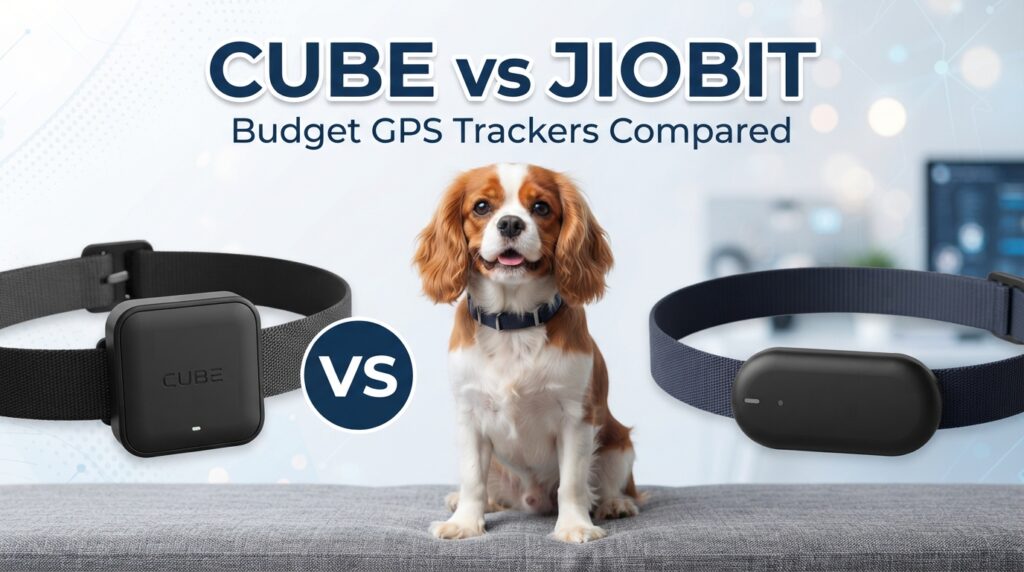
If you’re searching for an affordable GPS tracker for your dog or cat and have narrowed the field to the Cube GPS Tracker and the Jiobit Smart Tag, you’re comparing two genuinely different products. One was designed as a general-purpose tracker for keys, bags, and people. The other was built specifically for small children — but has found a loyal following among pet owners who need a compact, lightweight device.
Affiliate disclosure: PetTrackerHub may earn a commission from qualifying purchases made through links in this article, at no extra cost to you. Our editorial opinions are independent.
Neither is a dedicated pet tracker in the way that Tractive or Fi are, but both are priced attractively and offer real-time GPS tracking with relatively low device costs. The decision between them comes down to size, subscription structure, battery expectations, and how you intend to use the device.

- KEEP TRACK OF YOUR ASSETS: Whether you need to track a vehicle, luggage, pet, or person, Cube GPS Tracker makes it conve…
- LONG-LASTING BATTERY: Cube is the perfect tracker for long-distance tracking. With a monthly or annual data subscription…
- SHARE YOUR LOCATION: Multiple people want to keep track? No problem. Cube GPS Tracker allows you to share the location o…
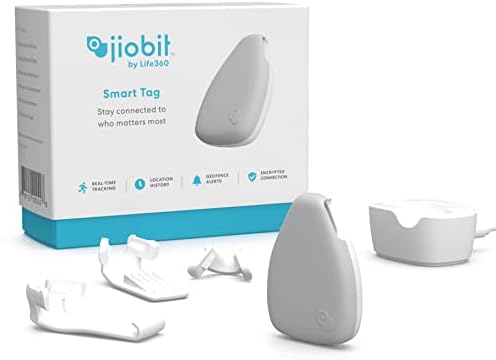
- Small, Lightweight and Durable: With our most powerful battery yet. Jiobit easily and discreetly attaches to clothing, s…
- Real-time GPS Location Sharing with Unlimited Nationwide Range: Our advanced, patented beacon technology leverages the c…
- Powerful Smart Alerts & Location History: Easily set up custom trusted places to be alerted when an area is entered or l…
This article breaks down every major difference so you can decide which — if either — makes sense for your pet.
Cube GPS vs Jiobit Smart Tag at a Glance
The table below summarizes the most important specs and features for quick comparison. Detailed explanations follow in each section.
| Feature | Cube GPS Tracker | Jiobit Smart Tag |
|---|---|---|
| Device type | General-purpose GPS tracker | Compact GPS/multi-tech tracker (designed for children) |
| Weight | Approx. 28 g (1 oz) | Approx. 19.6 g (0.69 oz) |
| Dimensions | Approx. 51 × 51 × 13 mm | Approx. 45 × 29 × 13 mm |
| Tracking tech | GPS + cellular (LTE) + Bluetooth | GPS + cellular (LTE/3G) + Wi-Fi + Bluetooth |
| Real-time tracking | Yes (subscription required) | Yes (subscription required) |
| Geofencing | Yes | Yes |
| Location history | Yes (varies by plan) | Yes |
| Battery life (advertised) | Up to 24 hours (GPS active) | Up to 7 days (mixed use) |
| Waterproof rating | Not officially rated IP67; water-resistant | IP67 rated |
| Subscription required | Yes | Yes |
| Monthly plan (est.) | ~$5–$8/month | ~$8.99/month (Jiobit plan via Life360) |
| Annual plan (est.) | ~$48–$60/year | ~$107.88/year (if paid monthly) |
| Approx. device price | ~$35–$50 | ~$49.99–$59.99 |
| Best suited for | General use, medium/large dogs, people | Small dogs, puppies, cats, kids |
Note: Prices and subscription plans can change. Always verify current pricing directly with retailers and official sources before purchasing.
Cube GPS Tracker Overview
The Cube GPS Tracker is a square-shaped, general-purpose tracking device marketed for locating keys, wallets, luggage, vehicles, and pets. It uses a combination of GPS, LTE cellular, and Bluetooth to report location.
Cube entered the market primarily as a Bluetooth tracker competitor to Tile and AirTag, but its GPS-enabled model expands the use case to situations where Bluetooth alone is insufficient — such as a dog that has left your yard.
Tracking technology: The Cube GPS model uses GPS for outdoor positioning and LTE cellular to transmit that location to your phone via the Cube app. Bluetooth is included for close-range detection. Because it relies on cellular networks, it requires an active data connection to send live updates.
Subscription: Cube GPS requires a paid plan to access live GPS tracking features. Without a subscription, the Bluetooth-only functionality still works within range, but you lose real-time location updates. According to Cube’s official product pages, subscription pricing varies by plan tier. Estimated costs are in the range of $5–$8 per month or $48–$60 per year depending on the plan, but you should verify current pricing directly on the Cube website before purchasing.
Battery life: Cube publishes battery documentation noting that battery performance depends heavily on how frequently the tracker updates and whether GPS is actively running. According to Cube’s official battery support documentation, active GPS use significantly reduces battery life compared to standby or Bluetooth-only modes. The advertised figure of approximately 24 hours in active GPS mode should be treated as a ceiling, not a guarantee, under real-world conditions. Battery drain increases in areas with poor cellular signal.
Pet compatibility: Cube GPS is not designed for pets. It has no dedicated collar attachment. Pet owners typically use a third-party collar loop or attachment clip. The square shape and relatively heavier weight compared to Jiobit make it less ideal for very small breeds or cats, though it is functional on medium and large dogs.
App: The Cube app is available for iOS and Android. It supports geofencing, location history, and live tracking while a subscription is active.
- KEEP TRACK OF YOUR ASSETS: Whether you need to track a vehicle, luggage, pet, or person, Cube GPS Tracker makes it conve…
- LONG-LASTING BATTERY: Cube is the perfect tracker for long-distance tracking. With a monthly or annual data subscription…
- SHARE YOUR LOCATION: Multiple people want to keep track? No problem. Cube GPS Tracker allows you to share the location o…
Jiobit Smart Tag Overview
The Jiobit Smart Tag is a purpose-built compact tracker that was originally designed for young children. It is now owned by Life360. While it is not marketed as a pet tracker, its small size and lightweight profile have made it popular among owners of small dogs, puppies, and cats.
Read our complete Jiobit Smart Tag review for a deeper look at how it performs specifically for pets.
Tracking technology: Jiobit uses a combination of GPS, LTE cellular, Wi-Fi positioning, and Bluetooth. This multi-technology approach allows it to maintain location awareness across different environments — indoors where GPS signals weaken, Jiobit can fall back on Wi-Fi and Bluetooth for approximate positioning. This is a meaningful practical advantage over GPS-only devices in indoor or urban canyon environments.
Subscription: Jiobit requires an active subscription. According to Life360’s official Jiobit subscription page, subscription options are available through Life360’s platform. Pricing is approximately $8.99 per month. Annual billing options may reduce the effective monthly cost. Verify current plan details directly with Life360 before purchase.
Battery life: Jiobit advertises up to 7 days of battery life. This figure reflects mixed-use scenarios combining Bluetooth and Wi-Fi positioning rather than continuous GPS use. Under frequent real-time GPS requests or poor cellular conditions, battery life will be shorter.
Form factor: At approximately 19.6 grams and 45 × 29 × 13 mm, Jiobit is notably smaller and lighter than most dedicated GPS pet trackers and lighter than the Cube GPS. It ships with a secure attachment loop designed for clothing, but third-party collar mounts are also available.
Coverage limitations: Like all cellular GPS trackers, Jiobit requires cellular network coverage to transmit location data. In rural areas, dead zones, or basements, live GPS updates may not be available. The Wi-Fi and Bluetooth fallback modes help in some indoor situations, but they do not replace cellular GPS for outdoor tracking.
- Small, Lightweight and Durable: With our most powerful battery yet. Jiobit easily and discreetly attaches to clothing, s…
- Real-time GPS Location Sharing with Unlimited Nationwide Range: Our advanced, patented beacon technology leverages the c…
- Powerful Smart Alerts & Location History: Easily set up custom trusted places to be alerted when an area is entered or l…
Cube vs Jiobit: Size and Weight
For pet owners, size and weight matter more than most tracker manufacturers acknowledge.
Cube GPS Tracker: Approximately 51 × 51 × 13 mm and 28 grams. That is roughly the weight of five U.S. quarters. For a medium or large dog — say, a Labrador or Golden Retriever — this is a manageable weight. For a toy breed under 5–6 kg, a Chihuahua, or a cat, 28 grams on a collar is not trivial.
Jiobit Smart Tag: Approximately 45 × 29 × 13 mm and 19.6 grams. It is smaller in both footprint and weight. For small breeds, the difference between 19 and 28 grams is meaningful, especially on a narrow collar.
General guidance on tracker weight: Many veterinary and pet safety sources suggest that collar attachments should not exceed approximately 5% of a pet’s body weight. A 3 kg (6.6 lb) cat should ideally carry no more than 150 grams total collar weight, so either tracker is technically within range for most cats or small dogs — but a lighter option is generally preferable.
Neither Cube nor Jiobit is the smallest tracker available. If weight is the primary concern, purpose-built pet trackers like the Tractive Mini or other compact models may be worth comparing. You can explore our guide to the best GPS trackers for dogs with real-time location tracking for a broader view.
GPS Tracking and Location Accuracy
Understanding how each device works technically helps set realistic expectations.
How GPS works: GPS uses signals from satellites to calculate a device’s physical position. This is the most accurate positioning method available to consumer trackers, but it requires an unobstructed view of the sky. GPS accuracy degrades indoors, in dense urban areas with tall buildings (urban canyon effect), or in thick tree canopy.
How cellular transmission works: GPS positioning alone does not send a location to your phone. The device must also have a cellular data connection to transmit that position. If GPS calculates a location but there is no cellular signal, you will not receive an update. This is a critical point many buyers overlook.
How Wi-Fi positioning works: Wi-Fi positioning uses known Wi-Fi network locations to estimate position. It is less precise than GPS outdoors — typically within tens to hundreds of meters — but it functions indoors where GPS fails. Jiobit uses Wi-Fi positioning as a fallback, which Cube GPS does not.
How Bluetooth works on these trackers: Bluetooth on both devices allows close-range detection — useful if your pet is nearby and GPS has not acquired a lock. It also enables proximity alerts. Bluetooth range is typically 10–30 meters under real-world conditions.
Cube GPS accuracy: As a GPS + LTE device, Cube’s outdoor accuracy depends on GPS signal quality and cellular connectivity. In good conditions, GPS accuracy for consumer devices is typically within 3–5 meters, though real-world performance varies. There is no independent published accuracy testing for Cube GPS specifically that we are aware of.
Jiobit accuracy: Jiobit uses the same GPS satellites as Cube and similarly depends on cellular for data transmission. The addition of Wi-Fi triangulation gives it a broader positioning toolset indoors. No independent third-party accuracy benchmark for Jiobit is available from verified sources we have reviewed.
Battery Life Compared
Battery life is one of the most misunderstood specifications in GPS tracker marketing.
Cube GPS battery: Cube’s official battery documentation explains that battery life varies significantly based on update frequency, GPS activity, Bluetooth usage, and cellular signal strength. Active GPS use — the mode you need when a pet is missing — drains the battery fastest. The advertised approximately 24-hour figure in GPS-active mode is an upper-bound estimate under favorable conditions, not a guaranteed daily runtime. Users should expect that continuous live tracking could drain the battery in considerably less than 24 hours depending on conditions.
Jiobit battery: Jiobit’s advertised 7-day battery life is achievable in mixed-use or standby-heavy scenarios. In a real pet-tracking scenario where you are actively requesting location updates or the device is moving frequently through varied cell coverage, battery life will be meaningfully shorter. The 7-day figure appears to reflect scenarios with Bluetooth and Wi-Fi activity rather than continuous cellular GPS.
Practical implication: If your dog escapes and you spend two hours continuously refreshing live location, both trackers will draw battery significantly faster than their advertised figures suggest. For Cube, this is a greater concern because its baseline active battery life is shorter. For Jiobit, the larger battery buffer gives more margin, but it is not unlimited.
Charging: Both devices use USB charging. Neither currently advertises wireless charging.
Subscription Cost and Long-Term Value
This is where many buyers experience sticker shock after purchase. The device price is only part of the total ownership cost.
| Cost Item | Cube GPS Tracker | Jiobit Smart Tag |
|---|---|---|
| Approx. device price | ~$35–$50 | ~$49.99–$59.99 |
| Monthly subscription (est.) | ~$5–$8/month | ~$8.99/month |
| Annual subscription (est.) | ~$48–$60/year | ~$107.88/year (at $8.99/mo) |
| Year 1 total cost (est.) | ~$83–$110 | ~$158–$168 |
| 3-year total cost (est.) | ~$179–$230 | ~$372–$382 |
Important: These are estimates based on publicly available pricing at the time of writing. Subscription tiers, annual discounts, and device pricing change. Always verify current costs before purchasing.
Key takeaway: Over three years, Jiobit’s subscription costs are meaningfully higher than Cube’s based on current estimated pricing. If budget is a primary concern, this difference is significant. However, the “cheaper” tracker is only good value if it actually meets your needs.
If recurring fees are a concern and you want to explore alternatives, our guide to dog tracking devices without monthly subscription fees covers options that avoid ongoing charges.
Features Compared
| Feature | Cube GPS | Jiobit Smart Tag |
|---|---|---|
| Live/real-time tracking | Yes (subscription) | Yes (subscription) |
| Geofencing | Yes | Yes |
| Escape/boundary alerts | Yes | Yes |
| Location history | Yes | Yes |
| App (iOS/Android) | Yes | Yes (via Life360) |
| Multi-user sharing | Yes | Yes |
| GPS | Yes | Yes |
| Cellular (LTE) | Yes | Yes |
| Wi-Fi positioning | No | Yes |
| Bluetooth | Yes | Yes |
| Water resistance | Water-resistant (not officially IP67 rated) | IP67 rated |
| Dedicated pet attachment | No | No (third-party mounts available) |
| Child-safe design | No | Yes (original use case) |
Water resistance note: IP67 rating means the device can withstand immersion in up to 1 meter of water for up to 30 minutes. Cube GPS has been described as water-resistant in marketing materials, but a formally certified IP67 rating has not been consistently confirmed in the product materials we reviewed. If your dog swims or lives in a wet environment, Jiobit’s confirmed IP67 rating is a meaningful advantage.
Which Is Better for Small Dogs and Puppies?
Neither Cube nor Jiobit is purpose-built for dogs, so the answer depends on your specific situation.
For small dogs (under 5 kg): Jiobit’s lighter weight (approximately 19.6 g vs. 28 g) and smaller footprint make it the more physically appropriate choice for very small breeds like Chihuahuas, Yorkshire Terriers, or Maltese. Cube’s square shape and greater weight are better suited to medium and large dogs.
For puppies: Weight matters more for growing small breeds than for large-breed puppies. A puppy destined to be a 30 kg dog will be able to handle either tracker well within a few months. A miniature breed puppy, however, may find even Jiobit’s weight notable.
Collar compatibility: Neither device has a dedicated pet collar mount. Jiobit has a secure loop attachment that third-party vendors have made collar adaptors for. Cube’s square form factor is less naturally collar-friendly.
Subscription cost for pet owners: If you are buying this purely for pet use, Cube’s lower subscription cost may be more appealing, assuming its feature set meets your needs.
Which Is Better for Cats?
Tracking cats presents unique challenges: they often move through tight spaces, may stay close to home, and may find heavier collars uncomfortable or unsafe.
Size argument for Jiobit: At approximately 19.6 grams, Jiobit is lighter and physically smaller — both relevant for cats. Cats should ideally wear breakaway safety collars, and a lighter tracker reduces the total collar load.
Coverage concern for cats: Cats often travel short distances from home. If your cat stays within your neighborhood, cellular GPS may still function adequately for finding them. However, if they hide indoors or in crawl spaces, Jiobit’s Wi-Fi positioning fallback may provide a slightly more useful approximate location than Cube’s GPS-only approach.
Battery consideration for cats: Because cats tend to be tracked less frequently than dogs (many cat owners check location periodically rather than continuously), Jiobit’s longer battery life is a practical advantage — fewer charging interruptions.
Important caveat: No GPS tracker replaces a microchip and proper cat ID for identification purposes. The American Kennel Club’s guidance on pet identification recommends microchipping as a permanent, reliable form of identification that no technology can replicate. GPS trackers are a complement to, not a replacement for, microchipping.
Which Is Better for Urban, Suburban, and Rural Areas?
Urban Areas
Dense cities with tall buildings create GPS challenges (“urban canyon” effect) for both devices. Jiobit’s Wi-Fi positioning fallback is an advantage here, as it can estimate location using nearby Wi-Fi networks when GPS struggles. Cellular coverage is generally strong in urban areas, which benefits both trackers.
Suburban Areas
Suburban environments typically offer good cellular coverage and open-sky GPS conditions. Both trackers perform reasonably well here. Cube’s lower subscription cost may make it more attractive if performance is comparable.
Rural Areas
Rural use is where both trackers face their biggest limitation: cellular dead zones. If your pet wanders into an area with no LTE coverage, neither tracker can transmit location data. No cellular GPS tracker — including Cube or Jiobit — solves this problem. If you live in a rural area with spotty coverage, you should verify your carrier’s coverage map carefully before purchasing. Consider also reading our Petfon vs Tractive GPS comparison, which includes trackers designed with rural coverage needs in mind.
Remote/Outdoor Areas
For hiking, camping, or large rural properties, cellular-based trackers like Cube and Jiobit are not ideal. GPS-only devices with satellite connectivity (such as Garmin’s sporting dog trackers) or trackers using alternative radio protocols perform better in truly remote areas.
Cube vs Jiobit for Escape-Artist Pets
If your dog or cat regularly tests fence lines or slips through gaps, a GPS tracker provides valuable peace of mind — with important caveats.
Geofencing and alerts: Both Cube and Jiobit support geofencing — virtual boundaries that trigger an alert when the tracker crosses them. This is useful for escape detection, but the alert is only as fast as the update interval. If the tracker updates location every 30–60 seconds, your pet could travel some distance before you receive the alert.
Live tracking: Both support live tracking when subscribed. Live tracking battery drain on both devices means extended search sessions may exhaust the battery before you locate your pet, especially if the original escape is not detected immediately.
Cellular dependency: If your pet escapes into an area without cellular coverage, you will lose tracking ability. This is a fundamental limitation of both devices and all consumer cellular GPS trackers.
Not a replacement for physical safety: A GPS tracker is a useful tool for finding a lost pet, but it does not prevent escape. Secure fencing, proper supervision, microchipping, and ID tags are the primary lines of defense. The AKC recommends that every pet have both current ID tags and a registered microchip, regardless of whether they wear a GPS tracker.
Also consider that a tracker’s battery may be partially depleted before the escape occurs. If your dog escapes with 20% battery remaining and the tracker is in active GPS mode, tracking time may be very limited.
Cube vs Jiobit — Pros and Cons
Cube GPS Tracker
Pros:
- Lower subscription cost than Jiobit (estimated)
- General-purpose design works for people, pets, and objects
- Simple app with live tracking and geofencing
- Reasonably compact for a multi-purpose tracker
Cons:
- No IP67 confirmed rating (water resistance is not fully certified in reviewed materials)
- Heavier and larger than Jiobit — less suitable for very small pets
- No Wi-Fi positioning fallback
- Battery life in active GPS mode is short (~24 hours maximum)
- No dedicated pet collar attachment
- Not designed for pets — collar mounting requires third-party accessories
- KEEP TRACK OF YOUR ASSETS: Whether you need to track a vehicle, luggage, pet, or person, Cube GPS Tracker makes it conve…
- LONG-LASTING BATTERY: Cube is the perfect tracker for long-distance tracking. With a monthly or annual data subscription…
- SHARE YOUR LOCATION: Multiple people want to keep track? No problem. Cube GPS Tracker allows you to share the location o…
Jiobit Smart Tag
Pros:
- Lighter and more compact — better for small dogs, puppies, cats
- IP67 water resistance rating
- Multi-technology (GPS + cellular + Wi-Fi + Bluetooth)
- Longer advertised battery life (up to 7 days in mixed use)
- Wi-Fi positioning fallback helps indoors
- Designed to be worn, with a secure attachment loop
Cons:
- Higher subscription cost than Cube (estimated)
- Designed for children, not pets — no dedicated pet features
- Dependent on Life360 platform after acquisition
- No dedicated pet collar mount without third-party accessories
- Cellular dead-zone limitations apply equally
- Real-world battery life in active GPS mode will be shorter than the 7-day figure
- Small, Lightweight and Durable: With our most powerful battery yet. Jiobit easily and discreetly attaches to clothing, s…
- Real-time GPS Location Sharing with Unlimited Nationwide Range: Our advanced, patented beacon technology leverages the c…
- Powerful Smart Alerts & Location History: Easily set up custom trusted places to be alerted when an area is entered or l…
Which Tracker Should You Choose?
Rather than declaring one universally better, here is a practical breakdown.
Choose Cube GPS Tracker if:
- You have a medium or large dog where weight is not a concern
- You want a general-purpose tracker that works for both your pet and your bag or keys
- Keeping subscription costs as low as possible is a priority
- You live in an area with strong LTE coverage
Choose Jiobit Smart Tag if:
- You have a small dog, puppy, or cat where weight and size matter
- You want IP67-rated waterproofing for a dog that swims or plays in rain
- You want Wi-Fi positioning to help locate a pet indoors
- You are comfortable with a higher subscription cost for the additional features
- You want longer battery buffer between charges
Consider another tracker entirely if:
- You live in a rural area with limited cellular coverage (explore GPS trackers using different technologies)
- Your pet is very active outdoors in remote environments (consider Garmin or satellite-based options)
- You want no subscription at all (see our guide to dog tracking devices without monthly subscription fees)
- You need dedicated pet-tracking features like activity monitoring, breed-specific data, or vet alerts (Tractive, Fi, or Whistle may be better fits)
Before You Buy: Checklist
Before purchasing either tracker, work through this checklist:
- Cellular coverage: Check your carrier’s LTE coverage map for your home address and the areas your pet is likely to travel.
- Recurring fees: Calculate the full Year 1 and 3-year cost, including subscription.
- Battery expectations: Understand that active GPS tracking drains battery far faster than advertised standby figures.
- Tracker size: Weigh your pet. A tracker exceeding 5% of body weight (collar and tracker combined) is worth reconsidering.
- Collar compatibility: Confirm you have or can purchase a collar mount or attachment that fits the device.
- Environment: Assess whether your pet spends time in areas where cellular coverage may be limited.
- Microchip and ID tags: Confirm your pet is already microchipped and wearing current ID tags. A GPS tracker complements but does not replace these.
Alternatives Worth Considering
If Cube or Jiobit does not feel like the right fit, several other trackers are worth evaluating:
Tractive GPS: A purpose-built pet tracker with a strong subscription model and live tracking. Available in versions for dogs and cats. Read our Apple AirTag vs Tractive GPS comparison to understand how Tractive compares to Bluetooth-based alternatives.
Apple AirTag: A Bluetooth-based crowd-sourced tracker with no subscription fee. It does not offer real-time GPS tracking and is entirely dependent on other Apple devices being nearby. It is not suitable as a standalone pet tracker for free-roaming pets.
Fi Series 3: A dedicated dog GPS collar with LTE-M cellular and a strong community network. Designed specifically for dogs with an optional GPS collar band.
Petfon: A GPS tracker designed for pets that works without a subscription over a direct connection. Explore our Petfon vs Tractive GPS comparison for a detailed look.
Our comprehensive guide to the best GPS trackers for dogs with real-time location tracking covers a wider range of options across different price points and use cases.
Check current Cube GPS pricing before buying. Check the latest Jiobit price and subscription directly from Life360/Jiobit before committing.
Frequently Asked Questions
1. Is Cube GPS better than Jiobit?
It depends on your use case. Cube GPS has a lower estimated subscription cost and works for multiple tracking purposes, making it practical for medium and large dog owners on a budget. Jiobit is lighter, smaller, IP67-rated, and has Wi-Fi positioning — advantages that matter most for small dogs, cats, and indoor environments. Neither is objectively better for every owner.
2. Does Cube GPS require a subscription?
Yes. While Cube’s Bluetooth functionality works without a subscription, live GPS tracking requires an active paid plan. Estimated costs are in the range of $5–$8 per month. Verify current plan pricing on Cube’s official website.
3. Does Jiobit require a subscription?
Yes. Jiobit requires a subscription through Life360 to access live GPS tracking. According to Life360’s official Jiobit subscription information, plans are approximately $8.99 per month. Always confirm current pricing before purchasing.
4. Which is smaller — Cube or Jiobit?
Jiobit is smaller and lighter. Cube GPS measures approximately 51 × 51 × 13 mm and weighs approximately 28 grams. Jiobit measures approximately 45 × 29 × 13 mm and weighs approximately 19.6 grams. The difference is meaningful for small pets. You can review Jiobit’s official press kit specifications for their current published dimensions.
5. Which has better battery life?
Jiobit advertises up to 7 days under mixed-use conditions; Cube GPS advertises approximately 24 hours in active GPS mode. In sustained real-time tracking scenarios, both will drain faster than their maximum advertised figures. Jiobit has a more substantial battery buffer, which is particularly useful for cats or pets tracked less frequently throughout the day.
6. Can Cube GPS track a dog in real time?
Yes, Cube GPS supports real-time tracking with an active subscription and cellular coverage. The Cube GPS Tracker product page describes live location capability. Active real-time tracking consumes battery faster than periodic updates.
7. Can Jiobit work without cellular service?
Jiobit can use Wi-Fi positioning and Bluetooth proximity detection indoors or in areas with Wi-Fi coverage, but it cannot transmit live GPS location without a cellular data connection. If your pet travels into a cellular dead zone, live tracking updates will not reach your phone until cellular service resumes.
8. Which is better for small dogs?
Jiobit is generally the better fit for small dogs because of its lighter weight, smaller size, and IP67 waterproofing. Cube GPS is more practical for medium and large dogs where weight is less of a concern.
9. Which is better for cats?
Jiobit has advantages for cat tracking: it is lighter, smaller, IP67-rated, and has Wi-Fi positioning that can provide approximate indoor locations. No GPS tracker is ideal for all cats, as coverage depends on cellular networks and cats often move in areas with variable signal. A breakaway collar with the lightest tracker available is always the safer physical choice for cats.
10. What is the total cost of owning each tracker?
Based on estimated current pricing: Cube GPS costs approximately $83–$110 in Year 1 and $179–$230 over three years. Jiobit costs approximately $158–$168 in Year 1 and $372–$382 over three years. These are estimates — verify current device pricing and subscription rates before purchasing, as costs are subject to change.
Always confirm current pricing, subscription terms, and specifications directly with Cube and Life360/Jiobit before making a purchase decision. Manufacturer specifications, independent reviews, and user-reported experiences can differ.